
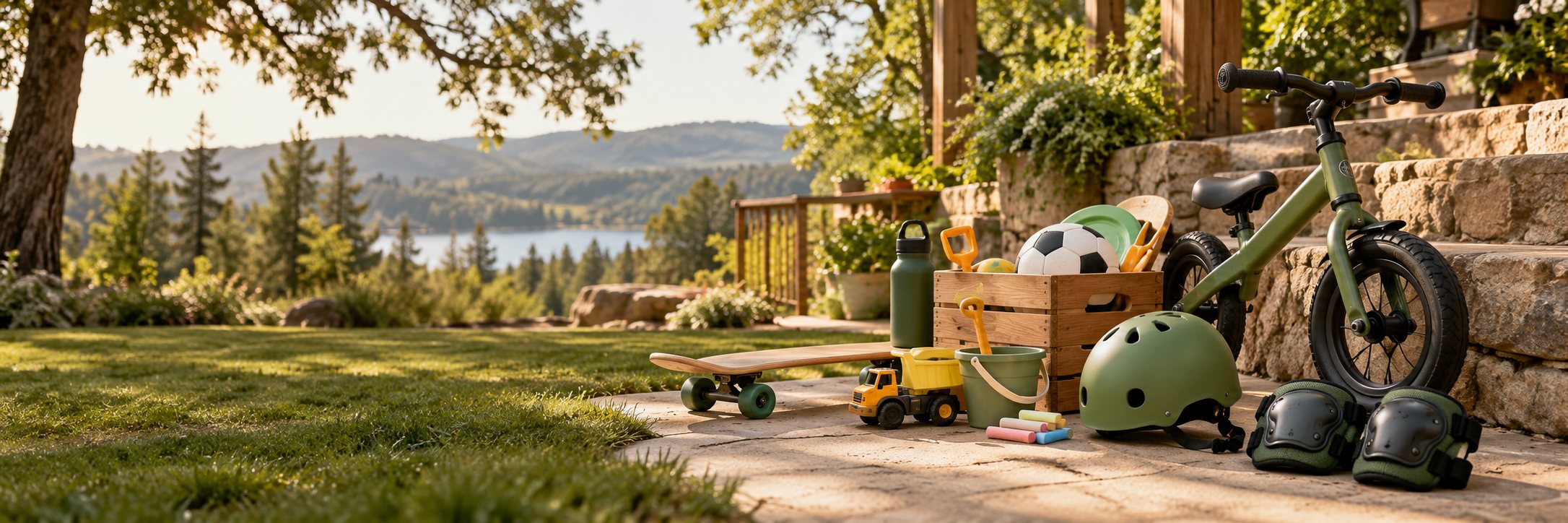
Start with the decision you need to make
Choosing within kids’ outdoor play becomes easier when you begin with a clear task instead of a long product list. Outdoor toys and play accessories: age guidance, safe use, protective equipment and supervision. This guide provides a category-specific framework for defining your needs, comparing alternatives and checking an offer before you buy. It does not rank named products or claim that a hands-on test has taken place.
Write a short brief: who will use the product, where it will be used, the problem it should solve and the maximum complete budget. Separate essential requirements from preferences. An essential requirement should eliminate an unsuitable option; a preference helps distinguish options that already meet the brief. Keep both lists short enough to use while reading specifications.
Three criteria worth comparing
Intended use and age
Read the maker's age grading, setup instructions and warnings. Consider the actual play space and follow the specified supervision and protective-equipment guidance.
Space and installation
Check the area needed to operate and store the item. Do not assume that an item fits safely simply because its main structure fits inside the available footprint.
Care and checks
Read inspection, maintenance and storage instructions. Think about who will perform those checks and how worn or damaged parts can be replaced.
Understand the trade-off
A smaller activity that fits the available space may be more practical than equipment requiring a setup you cannot maintain.
Avoid adding features together as though a longer list automatically creates a better product. Describe what you gain, what you give up and whether the difference matters in your intended use. If a claim cannot be traced to the exact model, mark it as unconfirmed rather than treating an assumption as a fact.
Build a useful comparison
Shortlist two or three realistic alternatives. For each, record the exact model or format, evidence for your essential requirements, included items, extra purchases, care requirements and seller terms. Use the same questions for every option. Compare current manufacturer information with clearly described independent observations, and distinguish both from promotional language.
A practical exercise
Measure the play area and compare it with the complete manufacturer's setup and use requirements, including surrounding space.
Before you place an order
- Confirm the exact model, size or format and the identity of the seller.
- Read the current instructions, included-item list and relevant warnings.
- Calculate the total cost, including required accessories and repeat purchases.
- Check delivery, return conditions, support and any applicable account requirements.
- Save the information behind your decision so you can check the delivered item against it.
What this guide can and cannot tell you
This is general shopping guidance, not a product test, guarantee, professional assessment or statement of current availability. It does not replace manufacturer instructions or advice for individual safety or health concerns. Product details and seller terms can change. Verify the information that matters to your decision using the current documentation before purchasing.